
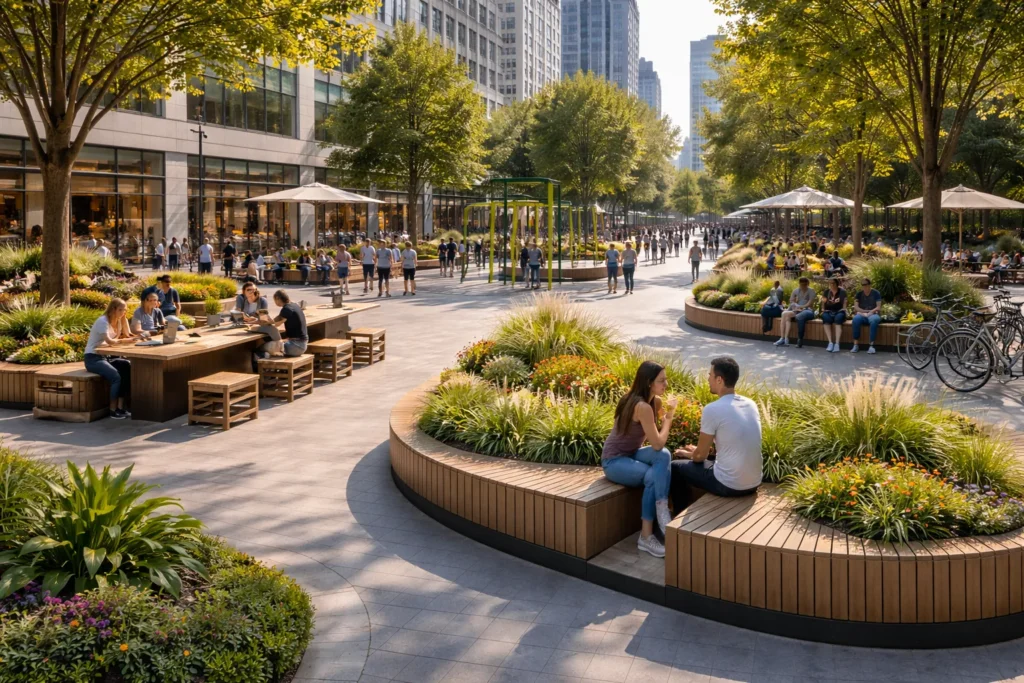
Urban furniture has become one of the clearest indicators of how cities and shared environments are changing. What once consisted mainly of benches and bins placed almost as an afterthought is now part of a deliberate strategy to shape how people interact with public space. Streets, plazas, promenades and parks are increasingly designed to invite people to stay, not just pass through, and furniture plays a central role in making that possible.
In regions where outdoor life is deeply rooted in daily routines, such as coastal cities and island territories, the relevance of well-planned urban furniture is even more evident. The Caribbean, for example, offers a context where climate allows year-round use of public areas, turning these spaces into natural meeting points. In these settings, urban furniture is not decorative filler but an essential component that supports social life, comfort and accessibility.
Designing for Climate and Everyday Use
Warm temperatures, high humidity and strong sunlight demand specific solutions when it comes to outdoor equipment. Urban furniture in tropical and subtropical regions must be resistant, but also pleasant to use. Materials such as treated steel, high-quality plastics, concrete and sustainable woods are commonly chosen for their durability, yet the way they are combined and finished makes a noticeable difference.
People tend to gravitate toward spaces that feel comfortable and intuitive. A shaded bench positioned to catch a breeze, a table placed near a walkway without blocking circulation, or a pergola that creates a natural pause point can all transform how an area is used. Good urban furniture responds to real habits, not abstract plans, and this is especially important in climates where people spend long periods outdoors.
From Isolated Pieces to Cohesive Environments
Another clear shift is the move away from isolated elements toward coordinated sets of furniture that define the character of a space. Instead of mixing unrelated benches, lights and barriers, many public projects now aim for visual and functional coherence. This helps spaces feel intentional and cared for, which in turn encourages respectful use by the community.
In tourist areas and residential developments alike, this cohesion contributes to a stronger sense of place. When furniture aligns with local architecture, landscape and cultural identity, public areas feel more welcoming. This approach is particularly relevant in destinations where public image matters, such as beachfront promenades or town centers frequented by both residents and visitors.
Accessibility and Inclusive Design
Modern urban furniture is also closely tied to accessibility. Designers and planners increasingly consider how people of different ages and abilities will interact with each element. Seat heights, armrests, clear circulation paths and proximity to services all influence whether a space can be comfortably used by everyone.
In regions with aging populations or strong community life, inclusive design is not optional. Furniture that allows older adults to rest easily, children to play safely and families to gather without obstacles supports more active and balanced public life. These considerations are becoming standard in many international projects, reflecting a broader understanding of public space as a shared resource.
The Role of Specialized Companies in the Caribbean
Creating functional and lasting urban environments requires more than good intentions. Experience, technical knowledge and an understanding of local conditions are essential. This is where specialized companies play a decisive role, particularly in regions with unique environmental challenges.
ACL Projects has positioned itself as a reference for the development and installation of outdoor fitness areas and urban furniture across Caribbean territories. Its work reflects an understanding of how climate, culture and daily use intersect. By focusing on robust solutions that still respect design and comfort, the company contributes to public spaces that remain usable and attractive over time, even under demanding conditions.
Urban Furniture and Community Life
Well-designed furniture encourages people to reclaim public spaces. When an area offers comfortable places to sit, gather or rest, it naturally becomes more active. This increased presence of people has a positive effect on safety and social cohesion, as spaces feel lived in rather than abandoned.
In island environments and coastal towns, this effect is amplified. Public spaces often serve as informal extensions of private life, hosting conversations, celebrations and everyday routines. Urban furniture supports this dynamic by providing the physical framework that allows social interaction to happen organically.
A Long-Term View of Public Space Quality
Urban furniture is no longer seen as a secondary element in planning. Its impact on how spaces are perceived and used is now widely recognized. Choosing the right designs, materials and layouts influences maintenance costs, user satisfaction and the overall success of public projects.
In regions like the Caribbean, where outdoor spaces are central to lifestyle and tourism, investing in thoughtful urban furniture has long-term benefits. It enhances the daily experience of residents while also shaping how visitors remember a place. Through careful planning and experienced execution, these elements help create public environments that are functional, inviting and deeply connected to their surroundings.

Hi, I’m Bilal, the founder of outofmagazine.com. I love sharing fresh ideas, stories, and helpful insights on all kinds of topics that spark curiosity. My goal with this site is simple—to create a space where readers can find inspiration, useful tips, and engaging reads on lifestyle, trends, and everything in between.