
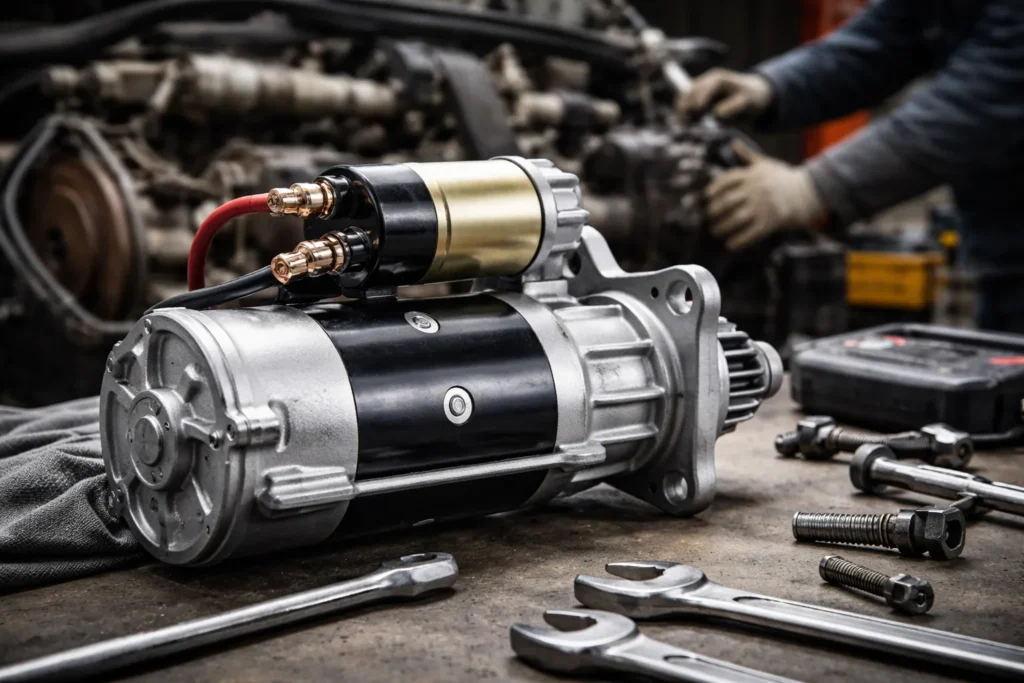
If you’re researching a diesel starter, you’re probably dealing with one of two situations: either an engine that’s becoming slow to crank (especially on cold mornings), or a project where reliability matters so much that “it usually starts” isn’t good enough. The starter motor is a small component compared to the engine itself, but it carries a big responsibility—delivering enough torque, fast enough, to get combustion going under real-world conditions.
What a diesel starter actually does (and why diesel is tougher than gasoline)
A starter’s job is simple in theory: spin the flywheel so the engine can begin its compression cycle. But diesel engines demand more from that spin because:
-
Higher compression ratios mean the engine resists turning more strongly.
-
Thicker oil when cold increases drag on rotating parts.
-
Large displacement / heavy-duty applications (generators, pumps, marine engines) require higher torque and longer cranking intervals.
That’s why diesel starters are typically built heavier than gasoline starters and why the “almost the same part” approach often ends in repeated failures.
The key parts inside a starter (in plain English)
Most diesel starters share a similar design:
-
Electric motor: Converts battery power into rotation.
-
Solenoid: Acts like a heavy-duty switch and also pushes the drive gear forward.
-
Pinion/drive gear (Bendix): Engages with the flywheel ring gear during cranking.
-
Overrunning clutch: Prevents the engine from “spinning the starter” once it fires.
-
Bushings/bearings and brushes (in many designs): Wear items that affect performance over time.
A healthy starter engages quickly, cranks strongly, and disengages cleanly—without grinding noises or slow, struggling turns.
Common symptoms and what they usually mean
Here are the most common starter-related complaints and the likely causes:
1) Slow cranking (especially when cold)
Often caused by:
-
Weak battery / wrong battery spec (CCA too low)
-
Poor grounds or corroded terminals
-
Starter motor wear (brushes, bearings)
-
Engine oil too thick for conditions
Pro tip: A starter can look like the problem when the real issue is voltage drop from cables or ground points.
2) Click… but no crank
Usually one of these:
-
Solenoid engages but battery voltage collapses under load
-
Bad connection at the battery, starter lug, or ground
-
Internal solenoid contacts worn/burned
-
Starter seized (motor won’t turn)
3) Grinding noise on start
Typically:
-
Worn pinion gear or flywheel ring gear teeth
-
Misalignment due to incorrect starter model or missing shim/spacer
-
Loose mounting bolts
Grinding is one of the few starter symptoms you should treat as urgent—because it can chew up the flywheel teeth, turning a starter job into a bigger repair.
4) Starter keeps spinning after the engine starts
Possible causes:
-
Solenoid sticking
-
Drive mechanism binding
-
Electrical issue keeping the solenoid energized
This can overheat the starter very quickly.
A simple, reliable way to diagnose (before buying parts)
If you want fewer “replace-and-hope” repairs, do these checks in order:
-
Battery health check
-
Confirm correct battery type and capacity for the engine.
-
If possible, test under load. A battery can show 12.6V at rest and still fail when cranking.
-
-
Voltage drop test on cables
-
High resistance in cables/grounds is a top cause of weak cranking.
-
Look for heat at terminals after cranking attempts (a clue for resistance).
-
-
Listen and observe
-
Single click vs repeated clicks vs no sound tells you a lot.
-
Dim lights during crank attempt often indicate battery/connection issues.
-
-
Starter current draw (if tools available)
-
Abnormally high draw can indicate internal drag/seizure.
-
Abnormally low draw with no crank can indicate bad solenoid contact.
-
Doing these checks can save money and prevent the cycle of swapping starters when the real culprit is wiring, grounds, or an undersized battery.
How to choose the right diesel starter (what actually matters)
When selecting a starter, match more than just “it fits.” Pay attention to:
-
Power rating / torque capacity: Diesel needs high torque—especially in larger engines.
-
Voltage: 12V and 24V systems are not interchangeable.
-
Mounting pattern and nose cone design: Misalignment leads to grinding and early failure.
-
Pinion tooth count and gear pitch: Must match the flywheel ring gear.
-
Duty cycle and environment: Marine, mining, dusty sites, and high-heat engine bays need robust sealing and build quality.
-
Availability of service parts: In heavy-duty operations, rebuildable units can be a cost advantage.
If the engine is mission-critical (emergency pumps, standby generators, industrial processes), reliability and repeatability matter more than initial cost.
When “electric starter + battery” isn’t enough
In many operations, the starter system has to work even if the electrical system is compromised—dead batteries, damaged wiring, or full power outage. That’s where independent starting methods can make sense, such as stored-energy systems that don’t rely on the engine’s main electrical supply.
This is one reason some industrial sites explore mechanical or hydraulic approaches for emergency starting—especially where safety requirements discourage sparks or where the consequences of a non-start are serious (fire protection pumps, backup generation, offshore equipment, and remote installations).
If you’re comparing options in that category, a manufacturer like Hidracar is one example of a company operating in the industrial equipment space where starters and reliability-focused components are part of the broader product ecosystem.
Maintenance tips that extend starter life
A starter often fails early because of conditions around it—not because the starter itself was “bad.” These habits help:
-
Keep connections clean and tight: Battery terminals and ground straps matter more than most people think.
-
Fix oil leaks near the starter: Oil contamination attracts dust and can affect the drive mechanism.
-
Avoid long cranking sessions: If it doesn’t start within a reasonable interval, troubleshoot—don’t overheat the starter.
-
Check charging system health: Undercharging slowly kills batteries and makes the starter work harder.
-
Use the right oil viscosity for climate: Especially important for cold starts.
Final thoughts
A diesel starter is a torque tool—built to overcome compression and inertia, often in harsh environments. The best results come from treating the starter as part of a system: battery, cables, grounds, mounting alignment, and operating conditions. If you diagnose carefully and choose a starter that truly matches the engine and duty cycle, you’ll get faster starts, fewer breakdowns, and less wasted time chasing the same problem again.

Hi, I’m Bilal, the founder of outofmagazine.com. I love sharing fresh ideas, stories, and helpful insights on all kinds of topics that spark curiosity. My goal with this site is simple—to create a space where readers can find inspiration, useful tips, and engaging reads on lifestyle, trends, and everything in between.